
Self-hosted changelog and roadmap: a widget without the subscription
Roundups of changelog widgets list subscription SaaS. Rungu ships embed widget, roadmap, and changelog views in one self-hosted binary. What that changes, with numbers.
Search for a changelog or roadmap widget and you get the same list: UserJot, Headway, Featurebase, sometimes Canny. Every item is a subscription, and every subscription means your product's public feedback loop runs on someone else's server. The roundups are right about the features. They skip one option entirely: run the whole thing yourself, in one binary, and keep the data.
The category is bigger than the roundups show
Featurebase's pricing page (accessed September 22, 2026) leads with a free plan capped at one seat, then paid tiers priced per AI resolution. UserJot's pricing page returned a 404 that same day, mid-migration to a new marketing site. Headway sits behind a bot check, so we did not re-verify its numbers.
None of this makes these products bad. It shows what you accept when the tool lives in someone else's infrastructure: seat counts, per-feature pricing, and pages that can move or disappear under you. Your changelog is part of your product's public face. The question worth asking is who holds it.
What Rungu ships for exactly this query
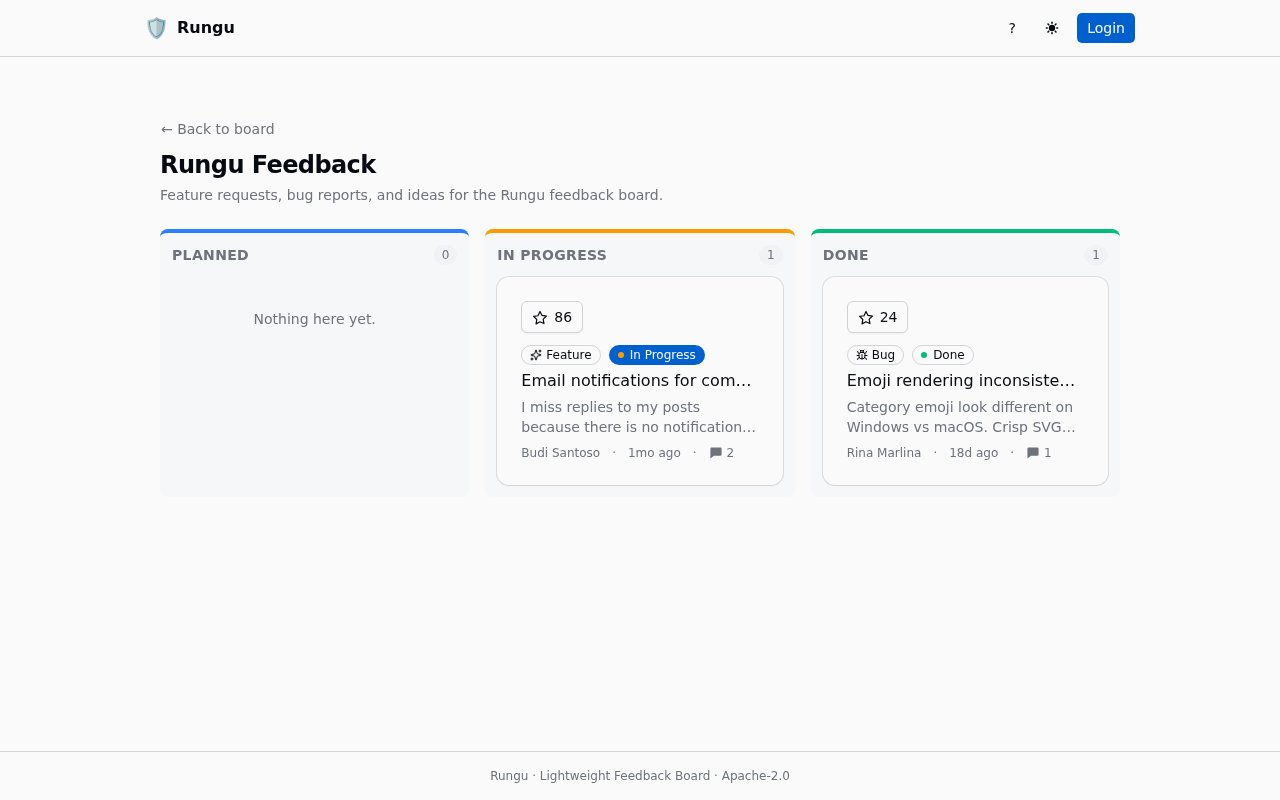
Rungu is a self-hosted feedback board with the pieces roundups charge for, released over four weeks this August and September:
- Embed widget (v0.3.0, August 14). One script tag puts a live board on any page. The loader is vanilla JS, no npm install on the host site, and the iframe auto-resizes via postMessage.
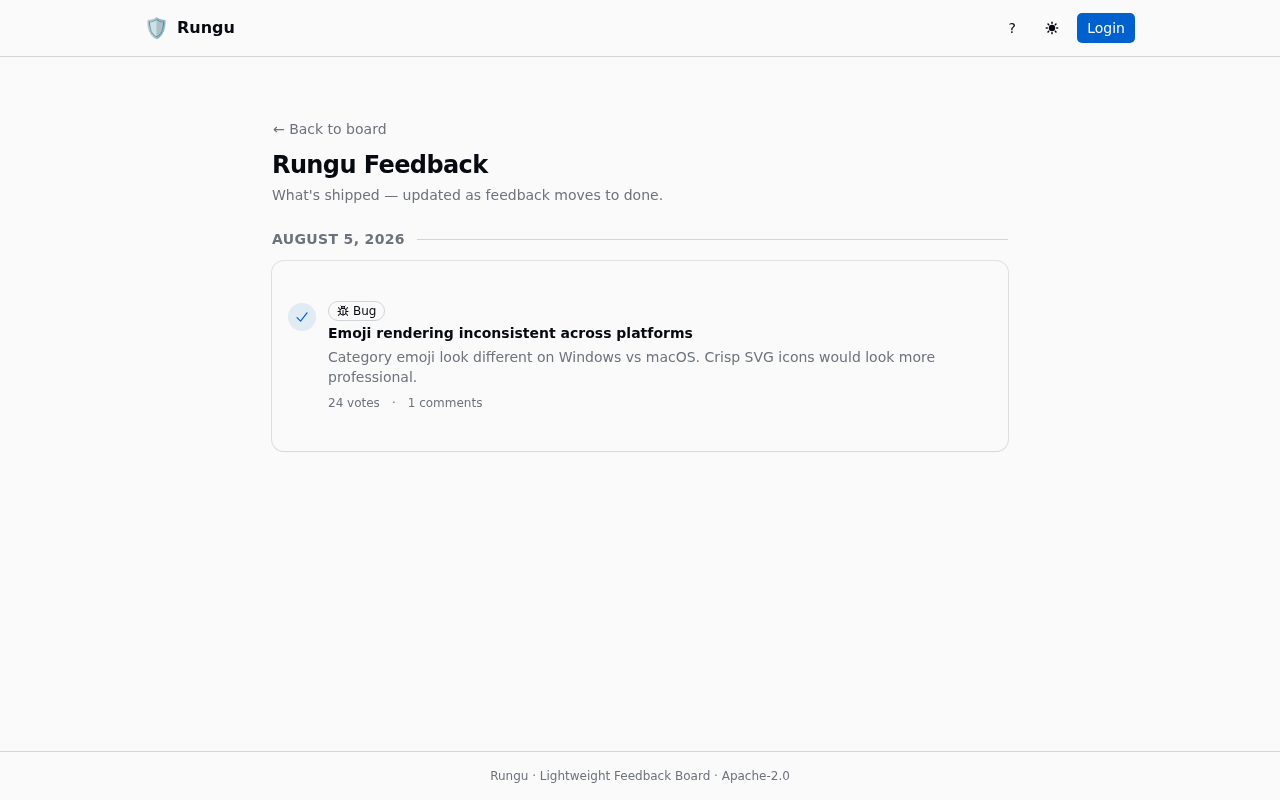
- Feedback, roadmap, and changelog views (v0.6.0, September 8). Three tabs under the board title, no separate products or add-ons.
- White-labeling (v0.4.0, September 6). Environment variables set your instance name, logo, and footer, and the embedded board carries your brand, not ours.
- Webhooks (v0.3.0). HMAC-SHA256 signed events for new posts, votes, and comments, with retries and a delivery audit log.
- Privacy-first analytics (v0.4.0). Aggregate counters only. No IPs, no cookies, no fingerprints.
- Agent access (v0.4.0). A REST API plus 26 MCP tools, so an AI agent can triage the board instead of only displaying it.
- One binary. The frontend ships embedded inside the Rust binary. SQLite by default, PostgreSQL through one environment variable.
Cost structure: self-hosting is free. Removing the "Powered by Rungu" badge is optional, $49 per major version or $70 lifetime, and an expired key only brings the badge back. Nothing gets throttled.
Honesty check: Rungu is small. Nine stars on GitHub as of September 22. The subscription tools have larger ecosystems, more integrations, and support teams you can call. If you want marketplace plugins and polished onboarding, pick them. If the requirement is a changelog, a roadmap, and a voting widget that live on your own server with no recurring bill, the list above is complete, and every item shipped between August 14 and September 8.
Side by side
| Subscription widgets | Rungu, self-hosted | |
|---|---|---|
| Where it runs | Vendor cloud | Your server, one binary |
| Where data lives | Vendor database | Your SQLite or PostgreSQL |
| Pricing | Per-seat subscription, tiered | Free self-host, optional $49 badge removal |
| Embeddable widget | Script snippet | Script snippet, zero npm |
| Changelog and roadmap views | Yes | Yes, tabs since v0.6.0 |
| Agent access | Varies by plan tier | REST API and 26 MCP tools, included |
Who should not self-host
If nobody on your team wants to own updates, backups, and uptime, do not self-host. A feedback board down for a week is worse than a subscription. Self-host when the feedback record matters enough to keep under your domain, on your data stack, next to the code it feeds. The maintenance surface is small: one container, one volume, standard backups.
Where to start
The repo is github.com/codecoradev/rungu. Docker Compose gets a board running with changelog, roadmap, and widget routes in one command. If you want the agent angle first, we wrote about running the board through its MCP tools in Rungu 0.4: a feedback board your AI agent can run, and a plain three-way comparison with Fider and Astuto lives here.
The widget roundups will keep recommending subscriptions until self-hosted options show up in the results with real numbers. This post is that entry.